Short Answer for Travelers
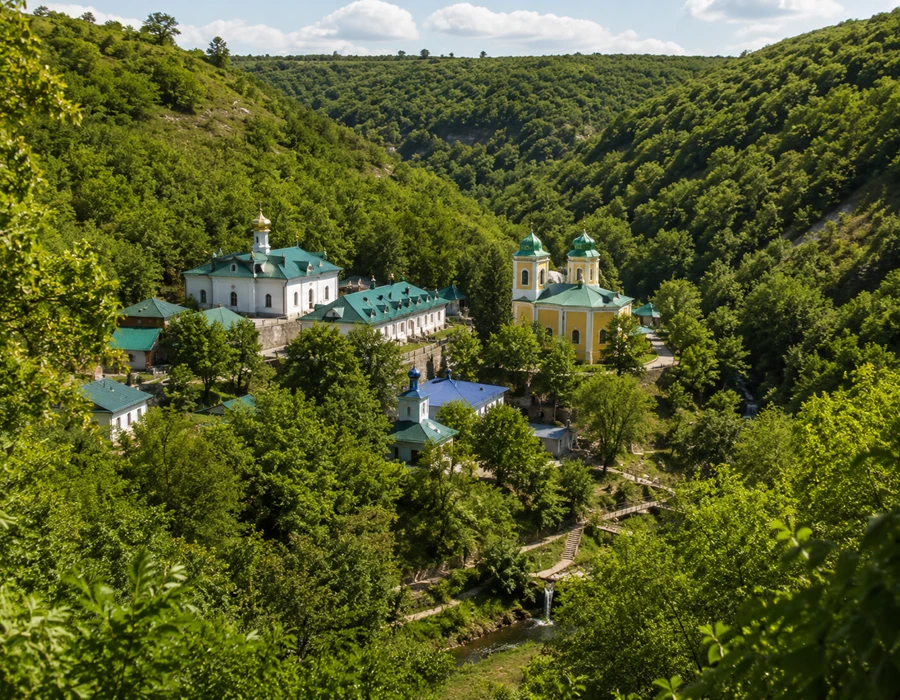
Hidden inside a forested valley in northeastern Moldova, this Orthodox sanctuary feels unlike anywhere else in the country. Waterfalls cut through limestone cliffs, monks still maintain centuries-old traditions, and pilgrims continue arriving in search of one of Moldova's most revered spiritual sites.
Unlike most religious sites in Moldova, the experience here unfolds across two completely different settings — an active monastery hidden below and an older cave sanctuary carved directly into the limestone cliffs above.
The journey north from Chișinău takes roughly two hours, and the final stretch winds through small villages before the road drops into the forested valley. Once there, the combination of ancient religious tradition, forested hiking terrain and waterfalls makes this one of the most rewarding day trips in the country.
Overview
The first thing that strikes most people arriving here is the noise — or rather, the absence of it. After the long drive north from Chișinău, the valley suddenly opens up, and the only sounds are water running through the gorge and the occasional bell from the monastery below.
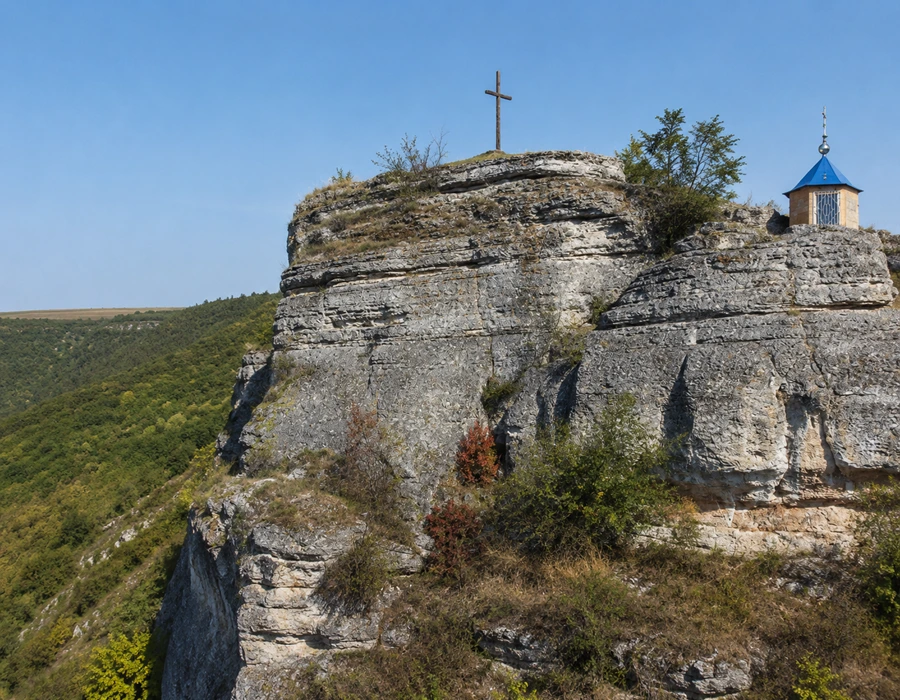
Once inside the valley, the layout quickly reveals why this place feels unusual. Below sits the active Holy Trinity monastery, while higher up in the cliffs, older cave sanctuaries remain carved directly into the rock face.
This pilgrimage site is considered one of the biggest centers of religious devotion in Moldova, known for its unique cave monastery, the relics of Saint Macarie, and the legendary footprint of the Mother of God left on a rock.
Local Insight
Among Moldovans, this Orthodox complex holds special significance as one of the country's most important pilgrimage destinations. The monastery is believed to house relics of Saint Macarie, and the footprint of the Mother of God left on a rock at the top of Grimidon Hill is a site of deep veneration.
Locals often compare the experience here with nearby Țîpova, although the atmosphere feels completely different. Instead of exposed cliffs and dramatic heights, the landscape here feels softer, greener and much quieter, making it a more accessible experience for many visitors.
Why Visit Saharna?
There are very few places in Moldova where Orthodox pilgrimage traditions feel this intertwined with the surrounding landscape. Here, the monastery never feels separated from the forest, the cliffs or the sound of running water moving through the gorge below.
Standing above the gorge, it becomes immediately clear why so many Moldovans return here repeatedly. The waterfalls, cliffs and unusual silence create an atmosphere rarely found elsewhere in the country.
After visiting this site, continue exploring Moldova's monasteries with our guides to Țîpova Monastery, Curchi Monastery, Căpriana Monastery, or discover Chișinău and Orheiul Vechi.
| Category | Saharna | Țîpova |
|---|---|---|
| Setting | Lush forest gorge with waterfalls | Dramatic cliffside above Dniester |
| Main attraction | Pilgrimage site + hiking | Cave monastery complex |
| Difficulty | Moderate | High |
| Parking | Easy | Limited |
| Family friendly | Better | Harder |
| Best for | Pilgrims and nature lovers | Adventurous photographers |
- One of Moldova's oldest monasteries – Founded in 1776 with cave hermitages dating back centuries
- Unique cave church – The Annunciation cave church carved into the cliffside
- Pilgrimage significance – Relics of Saint Macarie and the legendary footprint of the Mother of God
- Beautiful natural setting – A forested gorge with cascading waterfalls and hiking trails
- Combines well with Țîpova – The two monasteries are often visited together
- Moderate hiking – Well-suited for a half-day nature and culture experience
The Origins of Saharna's Religious Settlement
The origins of the settlement trace back to 1776, when a solitary monk named Bartholomew Ciungu arrived in what was then little more than untouched forest overlooking the Dniester valley.
He built a church, cells and other monastic buildings, establishing what would become one of Moldova's oldest monastic communities.
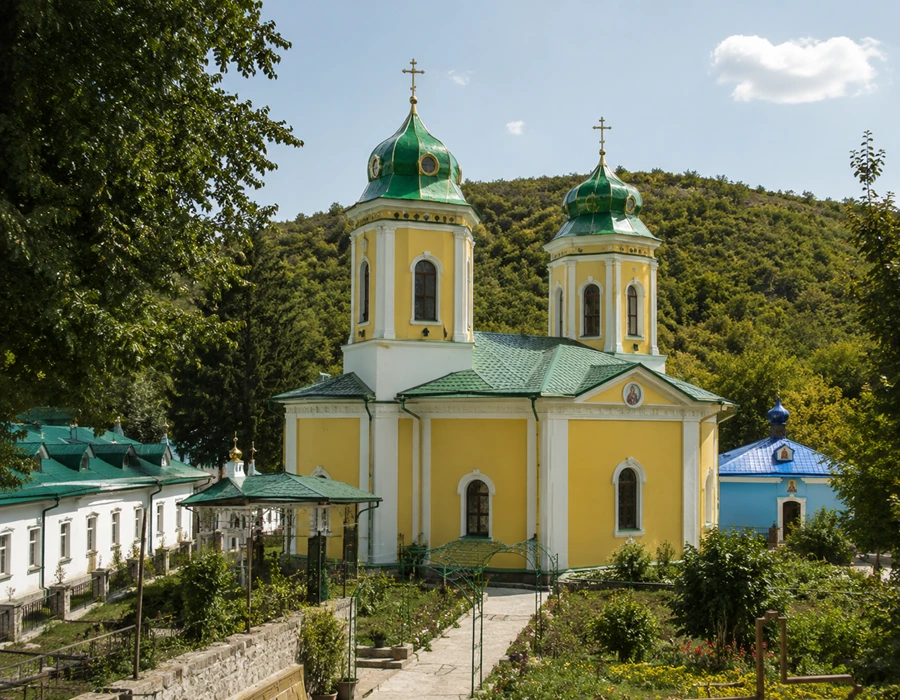
Between 1818 and 1821, the stone Church of the Holy Trinity was built, becoming the main temple of the monastery. The cave monastery was restored in 1857 after falling into severe deterioration.
Exploring the Sacred Complex and Cave Church
Walking through the grounds quickly reveals something unusual — this religious complex is split between the active monastery below and a far older cave sanctuary hidden higher up inside the cliffs.
The complex includes two churches: the cave church of the Annunciation carved into the rock, and the stone Holy Trinity Church built between 1818 and 1821 with a bell tower.
- The Holy Trinity Church – Main stone church with bell tower
- The Cave Church of the Annunciation – Ancient rock-cut sanctuary
- Relics of Saint Macarie – Major pilgrimage attraction
- Footprint of the Mother of God – Sacred site on Grimidon Hill
- Historic monastery buildings – Traditional Orthodox monastic complex
Hiking Trails and Waterfall Scenery
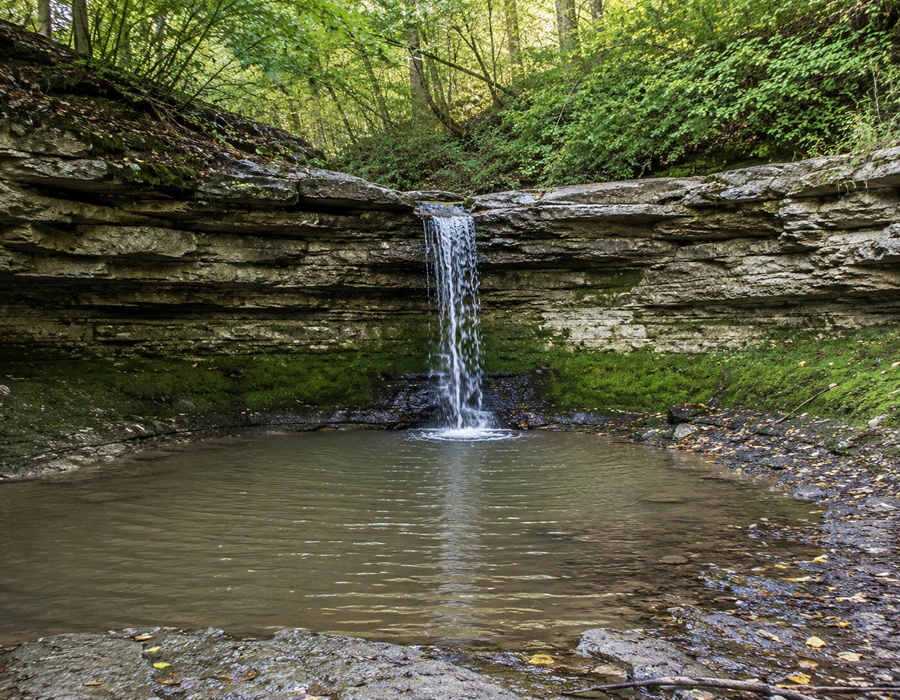
Beyond the monastery walls, forest trails descend into one of Moldova’s most beautiful natural landscapes where waterfalls cut through limestone formations hidden beneath thick oak forest.
The full hiking route takes longer than many visitors expect and can easily require several hours if exploring upper waterfalls and viewpoints.
- Saharna Waterfalls – Cascading pools hidden inside the gorge
- Grimidon Hill viewpoint – Sacred hilltop overlooking the valley
- Forest gorge trails – Beautiful green hiking terrain
- Dniester viewpoints – Panoramic valley scenery
- Protected flora – Unique regional plant species
Spiritual Importance and Pilgrimage
The monastery remains one of Moldova’s most important Orthodox pilgrimage destinations, attracting believers who come to venerate the relics of Saint Macarie.
The footprint of the Mother of God on Grimidon Hill remains one of the most sacred religious sites connected to Moldovan Orthodox tradition.
Saharna remains one of Moldova’s most spiritually significant Orthodox destinations, drawing pilgrims from across the country throughout the year.
Planning Your Visit
Leaving Chișinău early allows enough time to explore both the monastery complex and surrounding waterfall trails before returning the same day.
| Visitor Information | Details |
|---|---|
| Distance from Chișinău | 110 km |
| Drive time | 2 hours |
| Entrance fee | Donation recommended |
| Recommended stay | 3 hours |
| Difficulty | Moderate |
| Best season | April–October |
- Allow 2–4 hours
- Wear sturdy shoes
- Bring water
- Dress modestly
- Combine with Țîpova
How Much Time Should You Spend at Saharna?
The monastery itself and lower gorge can be explored in a couple of hours, while the full hiking loop requires closer to four hours or more.
Most travelers should plan between two and four hours depending on how much hiking they want to do.
Reaching the Monastery from Chișinău
The drive north from Chișinău takes roughly two hours, with the final stretch passing through small villages before descending into the forest valley.
- Private car – Most practical option
- Minibus – Possible but less convenient
- Organized tours – Often combined with Țîpova
- Best paired with nearby monasteries
Why This Monastery Belongs on Every Moldova Itinerary
Very few places in Moldova combine Orthodox pilgrimage traditions, waterfalls, hiking trails and dramatic natural scenery in such a unique way.
Compared with nearby Țîpova, Saharna feels greener, quieter and more accessible, making it especially rewarding for families and casual visitors.
Continue exploring Moldova's monasteries with Țîpova, Curchi, Căpriana and other top Moldova destinations.
Final Verdict
Saharna Monastery combines ancient cave monasticism, dramatic forest scenery and deep spiritual significance in one of Moldova’s most memorable destinations.
What stays with most visitors is the atmosphere — the sound of waterfalls, the silence of the forest and the unusual feeling of discovering one of Moldova’s most peaceful hidden spiritual sanctuaries.
Whether combined with Țîpova or visited independently, Saharna remains one of the country’s strongest monastery experiences for international travelers.