Short Answer for Travelers
Țîpova Monastery is one of the most spectacular religious destinations in Moldova and one of Eastern Europe’s most remarkable cave monastery complexes.
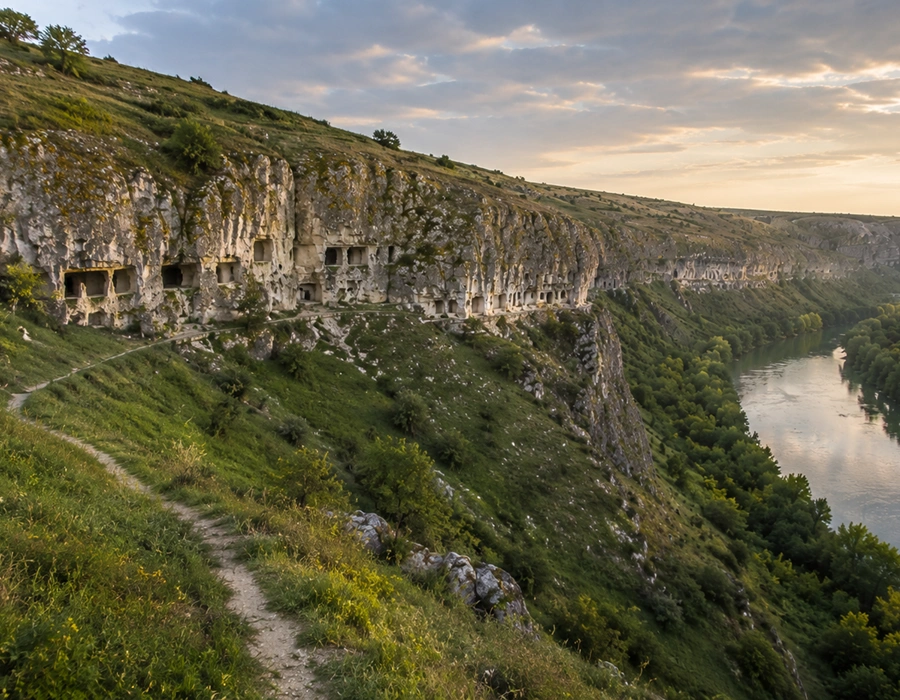
Located high above the Dniester River in Rezina District, it is famous for ancient cave churches carved directly into limestone cliffs, dramatic river valley landscapes and a remote spiritual atmosphere unlike anywhere else in Moldova.
For travelers interested in photography, hiking and authentic Orthodox heritage, Țîpova is one of Moldova’s most extraordinary destinations.
Overview
Țîpova Monastery is one of the most spectacular religious destinations in Moldova and one of Eastern Europe’s most remarkable cave monastery complexes.
The monastery sits above the village of Țîpova in Rezina District, approximately 100 kilometers north of Chișinău.
Perched high above the Dniester River valley, the location feels dramatically different from most monastery destinations in Moldova and immediately gives visitors a stronger sense of remoteness and isolation.
The site is famous for its cave churches, rock-cut monastic cells and breathtaking views over the river valley — a landscape that feels more like a remote mountain hermitage than a typical Moldovan religious site.
For travelers who want to experience a stronger nature and hiking element alongside their cultural exploration, Țîpova Monastery delivers something distinctly different from Moldova’s more accessible monastery destinations.
Local Insight
Unlike Curchi Monastery, which is polished, well-maintained and accessible to casual visitors, Țîpova feels wilder and more adventurous. The journey involves a challenging hike, the terrain is uneven and the visitor experience is far less developed.
But that is exactly what makes it memorable.
For travelers willing to make the effort, Țîpova offers a more authentic and spiritual atmosphere than most other monastery sites in Moldova. The cave churches carved into the cliffside, the views over the Dniester and the sense of isolation create an experience that lingers long after the visit.
Why Visit Țîpova Monastery?
Țîpova Monastery stands apart from Moldova’s other religious destinations because it is not primarily about architecture or historical artifacts — it is about landscape, atmosphere and the experience of reaching a place that feels genuinely remote.
There are several reasons why Țîpova consistently ranks among Moldova’s most spectacular monastery experiences:
- One of the largest cave monastery complexes in Eastern Europe, carved directly into limestone cliffs overlooking the Dniester River
- Dramatic views over the Dniester River and the surrounding valley
- A challenging but rewarding hike through forest and rocky terrain
- A sense of ancient isolation and spiritual intensity that few other Moldovan monasteries can match
- Exceptional photography opportunities, particularly during spring and autumn when the landscape is at its most beautiful
History of Țîpova Monastery
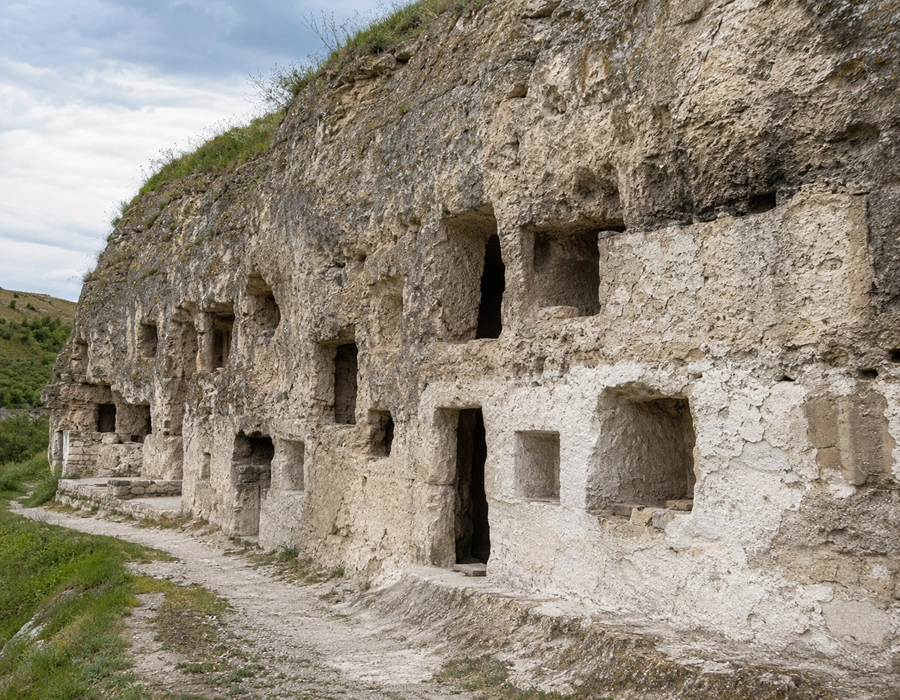
The cave monastery tradition at Țîpova dates back many centuries, making it one of the oldest known monastic settlements in Moldova.
Although exact founding dates remain uncertain, most historical records place the monastery’s development during the medieval period when monks began carving religious spaces directly into the limestone cliffs overlooking the Dniester River.
The location was deliberately chosen for its isolation — only a narrow path originally led to the monastery, keeping the community safe from invaders and unwanted attention.
For long periods, the monastery stood empty and abandoned. It was reopened in 1756, and during the late 18th century, when the threat of incursions diminished, wider access paths were created and monastic cells were enlarged. A church was also built during this period.
During the Soviet period, the monastery was closed and fell into disrepair. Some of the structures were even destroyed. From 1975, the site was protected by the state, and monastic life finally resumed in 1994.
Today, the monastery contains 18 cells spread across three levels on the steep cliff face. The monastic community is active, and the site continues to serve as a place of worship and pilgrimage — as well as one of Moldova’s most extraordinary travel destinations.
A local legend claims that Stephen the Great, Moldova’s greatest medieval ruler, married his wife Maria Voichița at Țîpova Monastery. While the historical accuracy of this story is uncertain, it speaks to the deep spiritual and cultural significance the site holds in the Moldovan imagination.
Architecture and Religious Significance
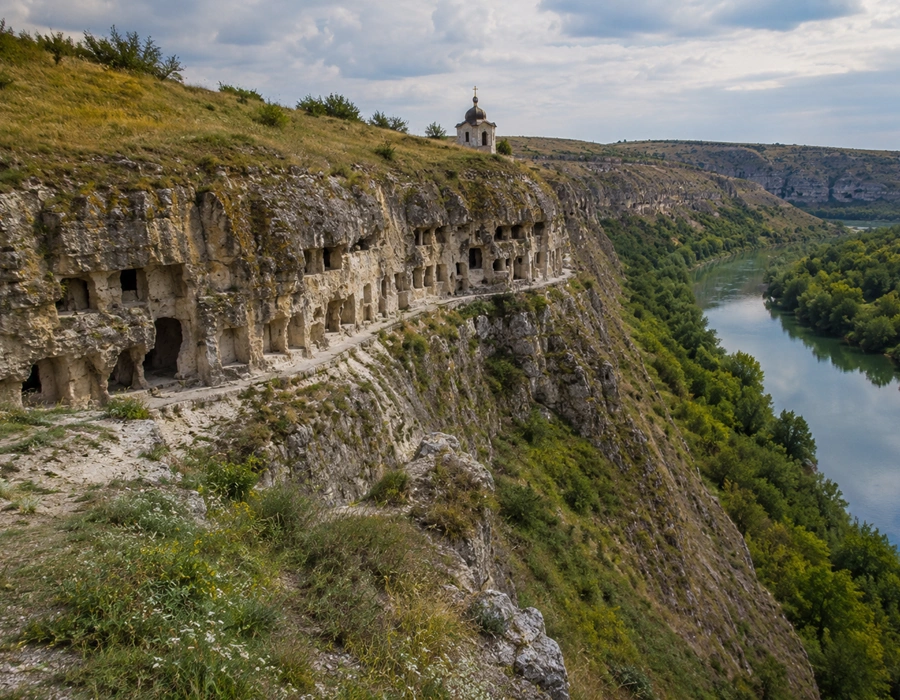
Țîpova Monastery is fundamentally different from Moldova’s classical monastery complexes. Instead of grand stone cathedrals and manicured courtyards, the monastery consists of cave churches, rock-hewn chapels and monastic cells carved into the cliff face over centuries.
The complex is carved into a white limestone massif, with dark window openings marking the cave dwellings that dot the steep cliff face. The 18 cells are arranged across three levels, creating a dramatic and vertiginous impression as visitors approach the site.
For photographers and landscape travelers, Țîpova Monastery offers one of the most visually dramatic scenes anywhere in Moldova.
The contrast between bright limestone cliffs, dark cave openings and the sweeping Dniester River valley creates one of the country’s most memorable landscapes.
The cave churches themselves are simple and raw, reflecting the ascetic spirituality of the monks who carved them. Unlike the ornate frescoes and gilded iconostases of monasteries like Curchi, the religious spaces at Țîpova are more modest — but their setting gives them a spiritual intensity that conventional buildings cannot match.
For travelers interested in the diversity of Orthodox monastic traditions, Țîpova offers something genuinely different: a place where faith and nature are inseparable, and where the act of worship is literally carved into the rock.
Țîpova Monastery is Moldova’s strongest monastery destination for travelers who want dramatic landscapes, hiking and cave monastery history rather than classical monastery architecture.
Visitor Experience
What to Expect During Your Visit
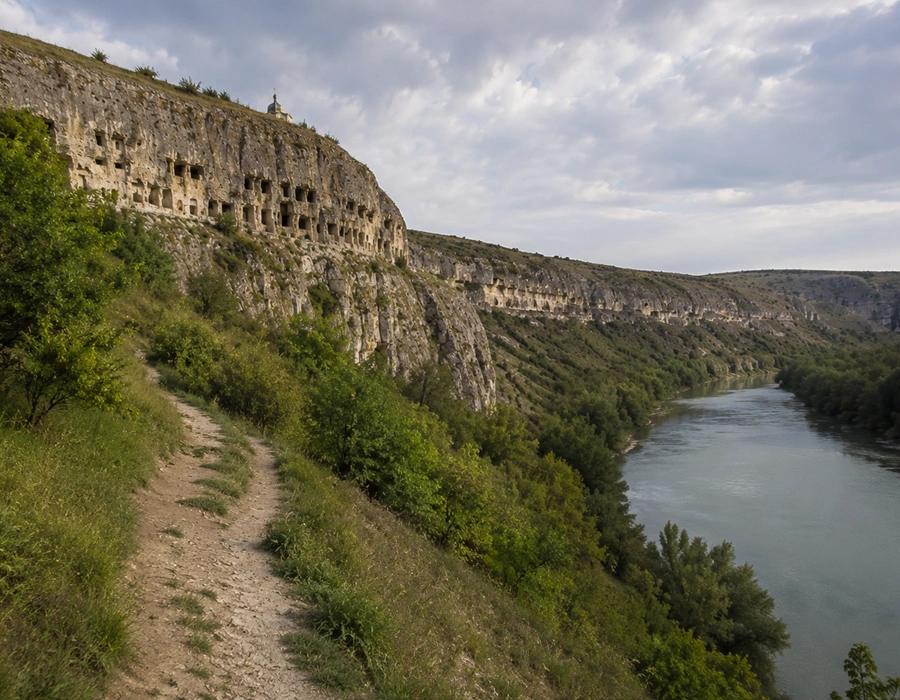
Unlike the polished experience at Curchi Monastery, a visit to Țîpova is more rugged and physically demanding. The approach requires a hike down steep, uneven paths with rocky terrain. Sturdy footwear is essential, and the walk can be challenging for those with limited mobility or young children.
However, the effort is rewarded by one of the most dramatic and atmospheric monastery experiences in Moldova. The cave churches themselves, the views over the Dniester Valley and the sense of isolation create a powerful impression that stays with visitors long after they leave.
Visitors should expect a stronger nature and hiking element than at most other Moldovan monasteries, combined with a pilgrimage atmosphere that feels genuinely spiritual rather than commercialized.
| Visitor Expectation | What It Means |
|---|---|
| Difficulty level | Moderate due to hiking and uneven terrain |
| Atmosphere | Remote, spiritual and adventurous |
| Best for | Photographers, hikers and cultural travelers |
| Main limitation | Less accessible for visitors with mobility issues |
Planning Your Visit
How to Visit Țîpova Monastery
Țîpova Monastery is located in Rezina District, near the village of Țîpova, approximately 100 kilometers north of Chișinău.
By Private Car:
The most practical way to reach Țîpova is by private car. The journey from Chișinău takes approximately 1.5 to 2 hours. A new road has made access easier, although the final approach to the monastery itself still involves a hike. Parking is available near the monastery.
Organized Excursions:
Some organized day tours from Chișinău include Țîpova Monastery, often combined with nearby Saharna Monastery or other destinations in northern Moldova.
By Public Transport:
Public transport options are limited and require multiple connections.
Best Time to Visit
Țîpova Monastery can be visited throughout the year, although spring and autumn usually provide the most comfortable overall conditions.
Summer offers the best hiking conditions, while winter visits can become more challenging due to weather and shorter daylight hours.
Practical Tips for Visitors
- Wear sturdy walking shoes — the trail is steep, uneven and rocky
- Bring drinking water, particularly during warmer months
- Carry cash if you wish to leave donations for the monastery
- Allow enough time for hiking, photography and exploring the surrounding valley viewpoints
- Travelers with limited mobility may find the route significantly more challenging than monasteries such as Curchi or Căpriana
Visitor Etiquette
- Dress modestly, with shoulders and knees covered
- Keep conversations quiet, particularly near active prayer areas
- Ask permission before photographing people or active worship
- Remember the monastery remains an active religious site and pilgrimage destination
Nearby Places Worth Visiting
Țîpova Monastery works particularly well as part of a wider route through northern and central Moldova.
Travelers building a monastery-focused route often combine Țîpova with Saharna Monastery, creating one of Moldova’s strongest religious and nature day trips.
For one of Moldova’s strongest monastery day trips, combine Țîpova Monastery with nearby Saharna Monastery and dramatic viewpoints overlooking the Dniester River valley.
- Saharna Monastery – Moldova’s most famous pilgrimage monastery with waterfalls and forest hiking trails
- Dniester River Viewpoints – Scenic overlooks above one of Moldova’s most dramatic river landscapes
- Rezina District Countryside – Traditional villages, quiet roads and authentic rural Moldova
- Orheiul Vechi – Moldova’s most famous archaeological complex with cave monasteries and dramatic limestone cliffs
Is Țîpova Monastery Worth Visiting?
Țîpova Monastery is absolutely worth visiting — but for different reasons than Moldova’s more famous monasteries.
Unlike Curchi, which appeals to travelers looking for polished architecture and easy accessibility, Țîpova offers a wilder and more adventurous experience.
For photographers, hikers, adventurous travelers and visitors interested in Moldova’s deeper spiritual heritage, few destinations in the country offer a stronger combination of landscape, history and authentic atmosphere.
Final Verdict
Few places in Moldova combine dramatic natural beauty, ancient spirituality and genuine adventure as completely as Țîpova Monastery.
Unlike Moldova’s grand architectural monasteries, Țîpova offers something far rarer — the feeling of discovering a sacred place that still feels wild, remote and deeply connected to nature.
For travelers seeking one of Moldova’s most unforgettable experiences, Țîpova belongs at the very top of the list.