Short Answer for Travelers
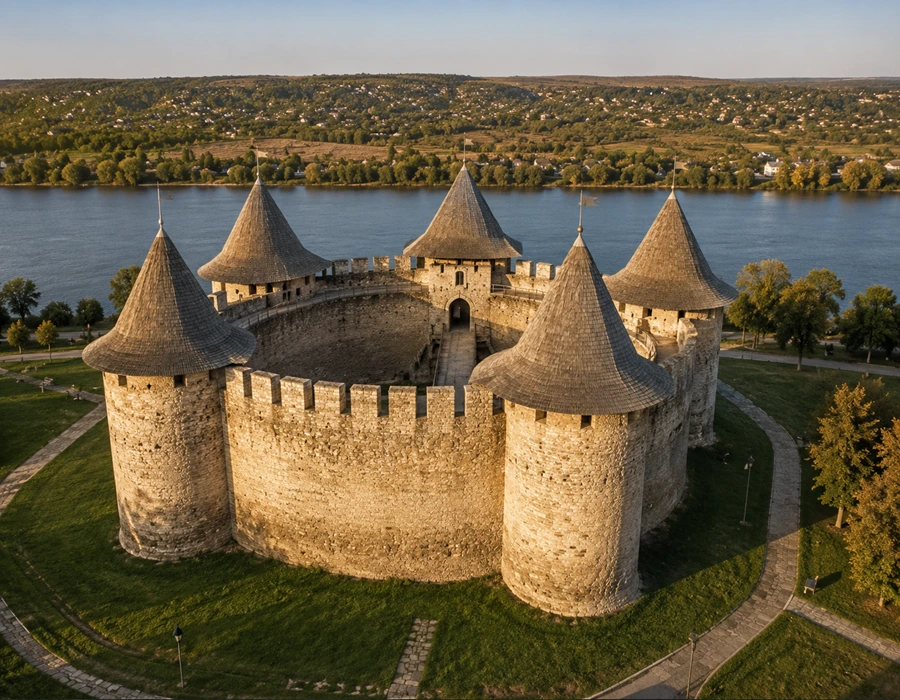
Standing above the Dniester River in northern Moldova, Soroca Fortress feels dramatically different from most places in the country. Instead of monasteries carved into cliffs or endless vineyard landscapes, visitors step directly into one of Eastern Europe’s best-preserved medieval defensive structures.
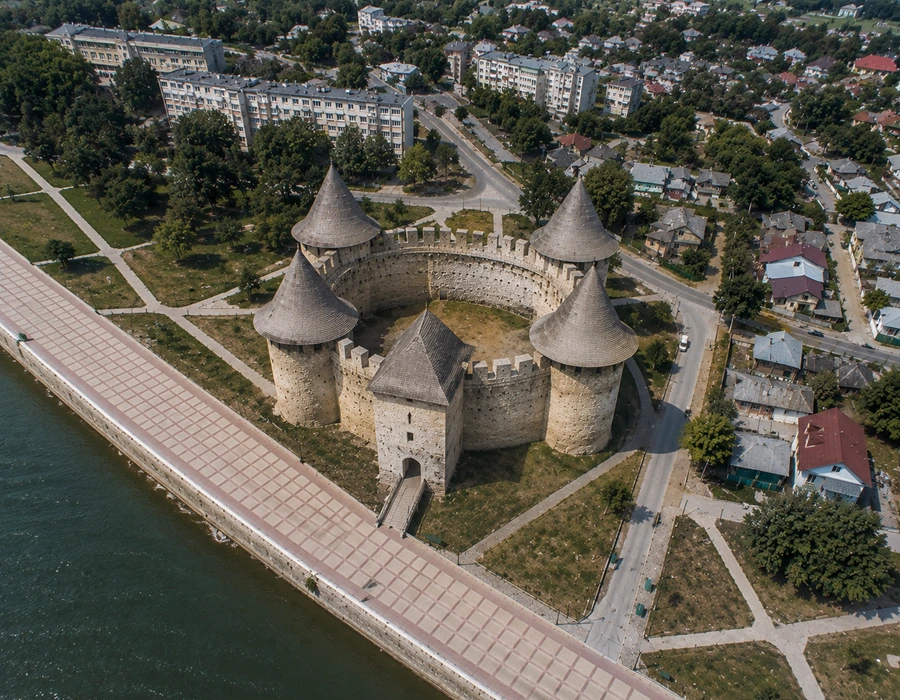
Built in 1499 by Stephen the Great and rebuilt in stone by Petru Rareș between 1543 and 1546, the fortress is famous for its distinctive circular shape with five equidistant towers — a design that makes it one of the most unusual fortifications in Eastern Europe.
Few historical landmarks in Moldova leave the same first impression. Between the symmetrical stone walls, elevated river views and centuries of military history, the experience feels surprisingly different from the country’s better-known monasteries and winery destinations.
First Impressions
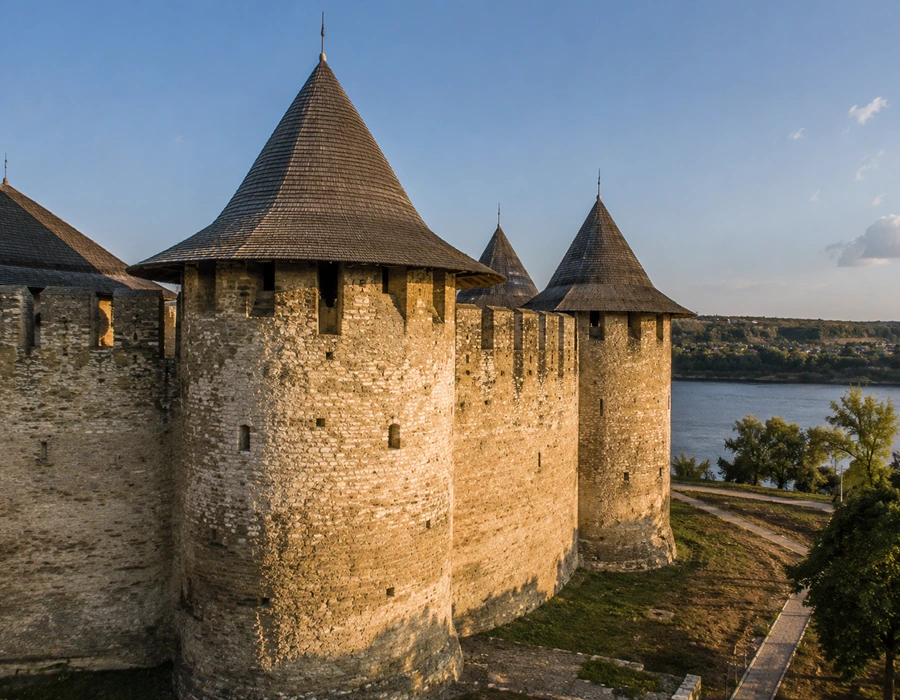
What surprises many first-time visitors is how advanced the engineering feels even by modern standards. Walking through the towers, it becomes difficult to imagine that much of this structure predates modern artillery warfare by centuries. The three-meter-thick walls, the curved design built to deflect cannonballs, and the sewage system that did not appear elsewhere in Moldova for another 200 years all make the citadel feel far ahead of its time.
The fortress sits on the right bank of the Dniester River, and the view from the ramparts stretches across the water into Ukraine. It is one of those rare places where the geography — the river, the border, the strategic crossing point — explains the history without needing a single signpost.
Many visitors underestimate how visually impressive the fortress becomes once you climb the upper ramparts. The elevated river views often end up being just as memorable as the historical architecture itself.
Local Insight
Among Moldovans, the Soroca citadel is considered one of the country’s most important historical monuments and a source of regional pride. It is deeply associated with Stephen the Great, Moldova’s greatest medieval ruler, and Petru Rareș, his son, who transformed the original wooden fort into the stone structure visible today.
Locals often point out that the fortress features innovations that were far ahead of their time — including a 360-degree guard passage on the upper level and individual bathrooms with sewage systems in each tower, features that did not appear elsewhere in Moldavian architecture until centuries later. The curved walls were specifically designed to deflect cannonballs, making it one of the most advanced defensive structures of its era.
For many Moldovans, Soroca represents far more than a historical monument. Schoolchildren across the country learn about Stephen the Great through stories connected to places like this, making the fortress part of Moldova’s national identity rather than simply another tourist attraction.
Why Soroca Matters Historically
Few places in Moldova combine military history, architectural innovation and breathtaking river views as seamlessly as this circular fortress on the Dniester. Standing at the top of the ramparts, the river stretching toward Ukraine on one side and the town of Soroca unfolding on the other, it becomes immediately clear why this location was chosen for such an ambitious defensive structure.
The fortress was part of a larger network of Moldavian fortifications — four forts along the Dniester, two on the Danube, and three on the northern borders — that together formed a “stone belt” protecting medieval Moldavia. Today, it stands as one of the best-preserved examples of late medieval military architecture in Eastern Europe, with estimates suggesting that 70–75% of the original structure remains intact.
After visiting the fortress, continue exploring northern Moldova with our guides to Chișinău, Moldova’s monasteries, or discover other top destinations.
| Feature | Soroca Fortress | Orheiul Vechi |
|---|---|---|
| Historical value | Extremely high | Extremely high |
| Family friendly | High | Moderate |
| Photography | Excellent | Excellent |
| Walking difficulty | Easy | Moderate |
| Accessibility | Easy | Moderate |
| Time needed | 2–3 hours | 3–4 hours |
- Unique circular architecture – The only fortress of its kind in Eastern Europe
- Stunning Dniester River views – Panoramic vistas from the ramparts and tower tops
- Medieval engineering innovation – Curved walls designed to deflect cannonballs
- Deep historical significance – Built by Stephen the Great and rebuilt by Petru Rareș
- Well-preserved and recently restored – Renovated with EU funding
- Affordable entry – Approximately 30 MDL for adults
- Easily combined with other sites – Near the Candle of Gratitude monument
The Origins of Soroca’s Fortifications
Long before modern Moldova existed as an independent country, this stretch of the Dniester River served as one of the region’s most strategically sensitive border crossings. It was here, at the end of the 15th century, that Stephen the Great decided to establish what would eventually become one of the country’s most important defensive positions.
The original structure was made of wood and clay, but between 1543 and 1546, Stephen’s son, Petru Rareș, ordered the construction of a stone fortress in its place. There is some scholarly debate about whether the stone fortress was completed before Rareș’s reign, with archaeological evidence including coins from Bogdan III’s reign referring to it in Latin as “Castrum nostru Soroceanu” — “our Soroca citadel.”
Over the centuries, the fortress played a significant role in regional conflicts. During the Great Turkish War, forces under John III Sobieski defended it against the Ottomans. It was later of vital military importance during Peter the Great’s Pruth Campaign in 1711, and it was sacked by the Russians during the Russo-Turkish War of 1735–1739.
During the Soviet period, the fortress was neglected, but restoration work began after Moldova’s independence. Two major restoration projects were carried out between 2013–2015 and again between 2021–2023 with funding from the European Union, strengthening the masonry, restoring damaged sections and preserving the roofs for long-term protection.
Inside the Fortress Walls
Walking through the fortress, one of the first things visitors notice is how remarkably intact the structure feels. The 30-meter diameter, the precise spacing between towers, and the massive three-meter-thick defensive walls remain clearly visible and surprisingly well preserved despite standing for nearly five centuries.
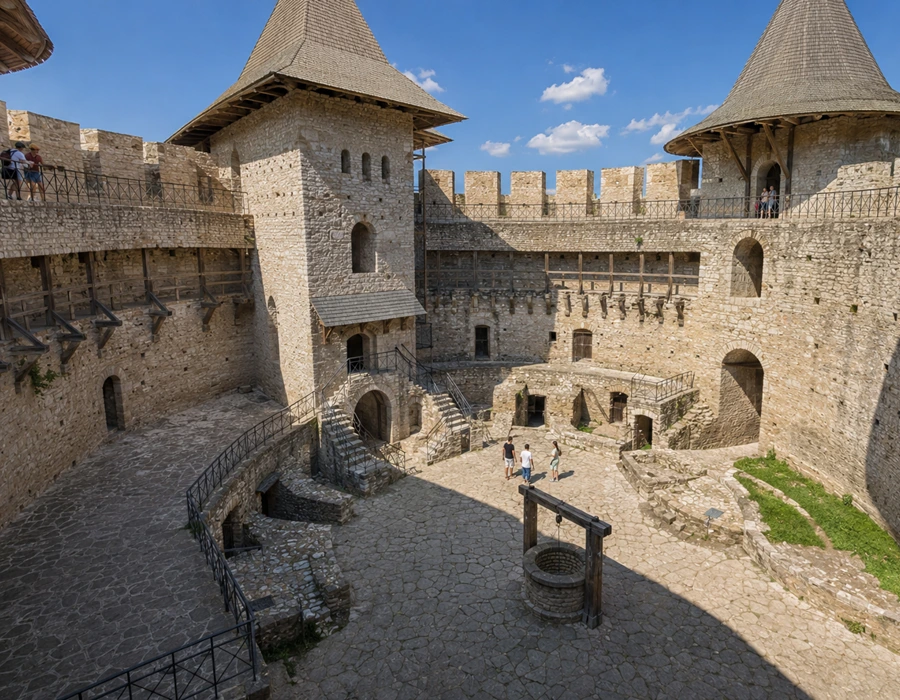
The interior now houses a small museum featuring historical exhibitions, photographs taken before restoration work began, and archaeological discoveries uncovered during excavation work. Following the latest restoration project, a former underground dungeon has also been converted into a new exhibition area open to visitors.
Architectural Design
Many visitors immediately notice the unusual symmetry. Standing in the courtyard, the structure feels almost mathematically perfect, with each tower positioned so evenly that the entire fortress appears far more modern than something originally constructed in the 16th century.
The construction used fine marl stone that proved exceptionally resistant against artillery fire. The curved exterior walls were deliberately designed to better resist direct impact from projectiles, while the circular layout itself followed advanced military engineering principles inspired by Italian Renaissance fortification design.
Planning Your Visit
The citadel is located approximately 160 kilometers north of Chișinău, making it one of the longer day trips from the capital. Most travelers either dedicate a full day to visiting Soroca or combine the fortress with an overnight stay while exploring northern Moldova.
| Visitor Information | Details |
|---|---|
| Distance from Chișinău | 160 km |
| Drive time | 3–4 hours |
| Entrance fee | Approximately 30 MDL |
| Opening hours | Wednesday–Sunday, 9:00–17:30 |
| Closed | Monday and Tuesday |
Tickets are sold separately at a small designated office rather than directly at the entrance. Guided tours are available for groups with advance registration, while independent travelers can freely explore most accessible areas on site.
Recent restoration work completed in 2023 also improved accessibility infrastructure, making much of the site easier to navigate compared with previous years.
- Buy tickets separately – Tickets are not sold at the fortress gate
- Check opening schedule – Closed every Monday and Tuesday
- Plan a full day – The drive from Chișinău is long
- Bring water and snacks – Limited nearby services available
- Combine with nearby attractions – Best experienced as part of a regional trip
When Is the Best Time to Visit?
Late spring and early autumn usually offer the most comfortable temperatures for exploring the fortress grounds and climbing the upper towers, while summer provides the clearest panoramic views across the Dniester River and the longest daylight hours for photography.
Winter visits are generally less practical due to seasonal closures and colder weather conditions in northern Moldova. For most international travelers, the period between May and October offers the best overall experience.
How Long to Stay
If you only have a day, the fortress itself together with nearby attractions — including the Candle of Gratitude monument and Gypsy Hill — can comfortably be explored within three to four hours. However, the travel time from Chișinău means most visitors dedicate an entire day to visiting Soroca.
A couple of hours is usually enough to explore the fortress interior, climb the towers and enjoy the elevated river views. Add extra time if you plan to combine several attractions in the surrounding area.
Getting There
Soroca is located approximately 160 kilometers north of Chișinău, and the journey normally takes between three and four hours by private car, organized excursion, or public bus services departing from Chișinău’s central bus station.
Visiting Soroca? Many travelers combine the fortress with other things to do in Soroca including the Candle of Gratitude monument, Gypsy Hill and scenic viewpoints overlooking the Dniester River.
Nearby Attractions
The region around Soroca offers several additional destinations worth including in a northern Moldova itinerary:
- Candle of Gratitude Monument – A 30-meter monument reached by climbing 650 steps overlooking the river valley
- Gypsy Hill – Famous for its unusual palace-style homes built by Soroca’s Roma community
- Dniester River Promenade – Scenic riverside walking area near the fortress
- Țîpova Monastery – Famous cave monastery located south of Soroca
- Orheiul Vechi – Moldova’s best-known historical and archaeological destination
Should You Visit Soroca Fortress?
There are very few places in Moldova where history feels this tangible. Inside the circular stone walls, visitors can walk through the same defensive passages where medieval soldiers once stood guard, climb towers overlooking the Dniester frontier and experience one of Moldova’s most historically significant military structures firsthand.
The experience here feels remarkably different from Moldova’s monastery sites or winery destinations. Instead of religious atmosphere or wine country scenery, the site offers something more practical and defensive — a structure built entirely around survival, strategic geography and advanced military engineering that still feels impressive nearly five centuries later.
For travelers interested in medieval military architecture, Moldovan history or discovering destinations beyond Moldova’s better-known tourism routes, Soroca remains one of the country’s most visually striking and historically rewarding experiences.
Continue exploring Moldova with our guides to Chișinău, Moldova’s monasteries, or discover other top travel destinations.
Our Verdict for Travelers
Among all destinations in Moldova, very few places leave the same impression as Soroca Fortress. Long after leaving, most visitors remember not the museum exhibits or historical facts, but the unusual feeling of standing inside a perfectly symmetrical defensive structure designed nearly five centuries ago while overlooking one of Eastern Europe’s oldest border rivers.
For travelers interested in understanding Moldova beyond wine tourism and monasteries, this remains one of the country’s most rewarding historical experiences. The combination of unique circular architecture, stunning river views and deep connections to Stephen the Great and Petru Rareș makes this fortress one of the most memorable destinations in northern Moldova.
Whether explored as a standalone destination or combined with a broader northern Moldova itinerary, few places offer such a direct connection to the country’s military history, architectural heritage and strategic importance along the Dniester frontier.